
As an Amazon Associate, we earn from qualifying purchases. This post contains affiliate links – if you buy through them, we may earn a commission at no extra cost to you.
Finding the best smart hubs for multiple ecosystems depends on your tolerance for technical tinkering and your existing device collection. Some users prioritize a “set it and forget it” experience, while others want deep control over local data and complex automation logic. Choosing the right hub comes down to how many protocols you need, whether you require local-first processing, and how much time you want to spend on setup. If you want a robust, local-first system that handles multiple protocols with ease, look toward the Hubitat Elevation C-8 Pro; for those who need the widest possible compatibility with thousands of mainstream brands, the Aeotec Smart Home Hub is often the better choice.
| Best Choice | |||
| Preview |  |  |  |
|---|---|---|---|
| Product | Hubitat Elevation C-8 Pro | Homey Pro | Aeotec Smart Home Hub |
| Brand | Hubitat | Homey | AEOTEC |
| Best for | Best Overall | Most Advanced Integration | Best Ecosystem Compatibility |
| The listing says | Local processing for instant response Compatible with Alexa, Google Home, Apple HomeKit | Double the RAM for more devices Homey Flow for custom automations | Connects thousands of compatible devices Custom automations via SmartThings app |
| More information | Check Latest Price on Amazon | Check Latest Price on Amazon | Check Latest Price on Amazon |
1. Hubitat Elevation C-8 Pro Smart Home Hub
Best for: Users who want total local control and complex, private automation sequences.
The Hubitat Elevation C-8 Pro focuses heavily on local processing. By keeping your automation logic on the device rather than the cloud, it provides fast response times and ensures your home continues to function even if your internet connection fails. This is a significant advantage for those who prefer their device data to remain within their own four walls.
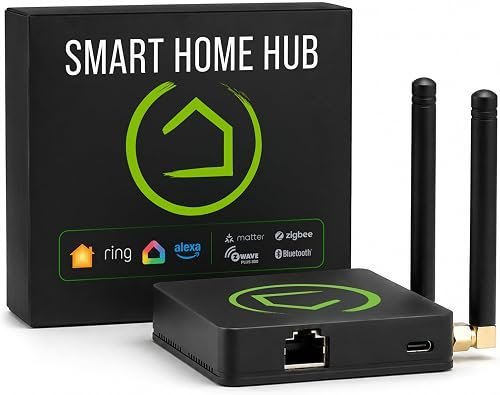
This hub is designed for those who appreciate a DIY approach. It supports a wide range of protocols, including Matter 1.5, Z-Wave 800 Series, and Zigbee 3.0, using dedicated external antennas to reach devices in larger homes.
Good if:
- You want your home to stay functional during internet outages.
- You need deep, multi-condition logic for complex automation routines.
- You prioritize data privacy by keeping device commands local.
Skip it if:
- You find technical setup and rule building intimidating.
2. Homey Pro (2026)
Best for: Advanced users who want to unify a vast array of niche and mainstream brands.
Homey Pro distinguishes itself by supporting seven different technologies, including Infrared and Thread, in one local-first hub. It’s built for those who have a fragmented collection of devices from many different manufacturers and want to bring them all into a single, cohesive interface. The ability to manage energy usage and receive real-time alerts adds a layer of utility beyond simple light control.
The hub offers two ways to build your automations: the standard Homey app for quick tasks and the Web App for more sophisticated “Advanced Flows.” While this flexibility is powerful, it represents a steeper learning curve than standard ecosystem hubs.
Good if:
- You have a complex mix of devices using many different wireless protocols.
- You want to monitor historical energy usage for your connected appliances.
- You enjoy creating sophisticated automation flows via a web interface.
Skip it if:
- You only own a few basic smart lights or a single voice assistant.
3. Aeotec Smart Home Hub
Best for: Users deeply invested in the SmartThings ecosystem who want wide mainstream compatibility.
The Aeotec Smart Home Hub serves as a gateway that leverages the SmartThings platform. It excels at connecting thousands of devices from major brands, making it an ideal choice for someone who already owns a variety of smart home products and wants them to work together under one roof. The setup is straightforward, offering both Wi-Fi and Ethernet connectivity options to suit your home’s layout.
Because it runs on the established SmartThings infrastructure, it’s highly accessible for those who are already familiar with the mobile app interface. The listing doesn’t mention cloud-dependency or firmware control limitations.
Good if:
- You want a familiar, user-friendly mobile app interface.
- You already own or plan to buy devices certified for the SmartThings ecosystem.
- You need a fast, simple setup using either Wi-Fi or a wired Ethernet cable.
Skip it if:
- You’re strictly looking for a hub that never requires a cloud connection.
Choosing the best smart hubs for multiple ecosystems
All three hubs support the most common protocols like Zigbee and Matter, ensuring they can communicate with a vast range of modern smart devices. They all function as central bridges, reducing the need for multiple manufacturer-specific hubs. However, they differ significantly in their target user. While Aeotec is designed for broad, easy compatibility, Hubitat and Homey cater to those who want more granular, local-first control.
Still Not Sure?
How often will I really use these features?
If you only need basic light and thermostat control, a simple ecosystem-specific hub is enough. For users who want to link diverse, non-standard devices, the Homey Pro is the right choice.
What do I already own?
Check your current device protocols first. If your home is full of Z-Wave and Zigbee sensors, the Hubitat Elevation C-8 Pro provides the most dedicated hardware support for those specific signals.
What am I most likely to regret?
Choosing a hub that’s too simple for your growing needs is a common mistake.
The choice between these hubs usually comes down to whether you prefer ease of use or advanced control. Choose Aeotec for a simple setup, or Hubitat for a local, private-first approach.
Related guides
- 3 Best Smart Plugs for Outdoor Use: Our Top Picks in 2026
- 3 Best Smart Light Strips for Bedrooms: Our Top Picks in 2026
- 3 Best Smart Bulbs for Bedroom Ambiance: Our Top Picks in 2026
Frequently Asked Questions
Which hub is the most compatible with different brands?
The Homey Pro supports over 50,000 devices from more than 1,000 brands. Its open platform allows for both official and community-built apps, making it highly versatile for connecting many different manufacturers.
Do these hubs require a constant internet connection?
Local-first hubs like the Hubitat Elevation C-8 Pro and Homey Pro process automations on-premise, allowing them to remain functional even if your internet connection goes down, unlike cloud-dependent setups.
Can I use these hubs with my existing voice assistant?
Yes, all three hubs are compatible with major voice assistants like Amazon Alexa and Google Home. Matter smart home standards ensure that devices across these ecosystems can communicate reliably with your chosen hub.
Is it hard to set up a smart home hub?
The Aeotec Smart Home Hub is designed for a fast setup in minutes using the SmartThings app. Hubitat and Homey offer more advanced settings that may take longer to configure properly.
Conclusion
Before you commit to a specific device, take a moment to list the gadgets you already own. Checking their compatibility requirements will save you plenty of headaches later. Once you’ve verified your gear, you’ll be ready to build a home that finally works exactly the way you want it to.
Pingback: 3 Best Matter Hubs for Smart Home Devices: Our Top Picks in 2026 - nestsynq.com